This past week I have been attending the 94th National Honey Show [NHS] in Esher Surrey. I have attended an odd day for the past two years, but this year during my full retirement first year, I opted to help steward for the full four days. A great experience learning lots from those who regularly display their honey, wax blocks and comb honey and aghast how clever people are with their display creations.
I haven’t been brave enough to enter any of my honey or wax into the NHS competition classes yet, but I have entered the written classes which included this year a short article on ‘a beekeeping topic of interest to the public’. This year I chose honeybee swarming and you can find my entry below:
The Wonder of the Honeybee Swarm
Each spring beekeeper swarm collectors receive panicked ‘phone calls from householders, “Help! I’ve got lots of bees in my garden. Can you remove them for me?” With thousands of bees in the air the householder may not appreciate it, but they are witnessing a wonder of nature, a honeybee swarm. This swarming behaviour is the unique way in which a honeybee colony reproduces and chooses a new home in the process. A behaviour that has contributed to the success of the western honeybee, which originated in Asia and over millennia spread into Europe and Africa.
What is swarming and how do honeybees select their new home?
Honeybees have evolved a different pathway to reproduction than other social insects, such as bumble bees or wasps. When the colony is at its peak in population, running out of space in their nest, the old queen leaves the colony with 10,000 – 20,000 of the colony’s workers to start a new colony, leaving behind a new queen.
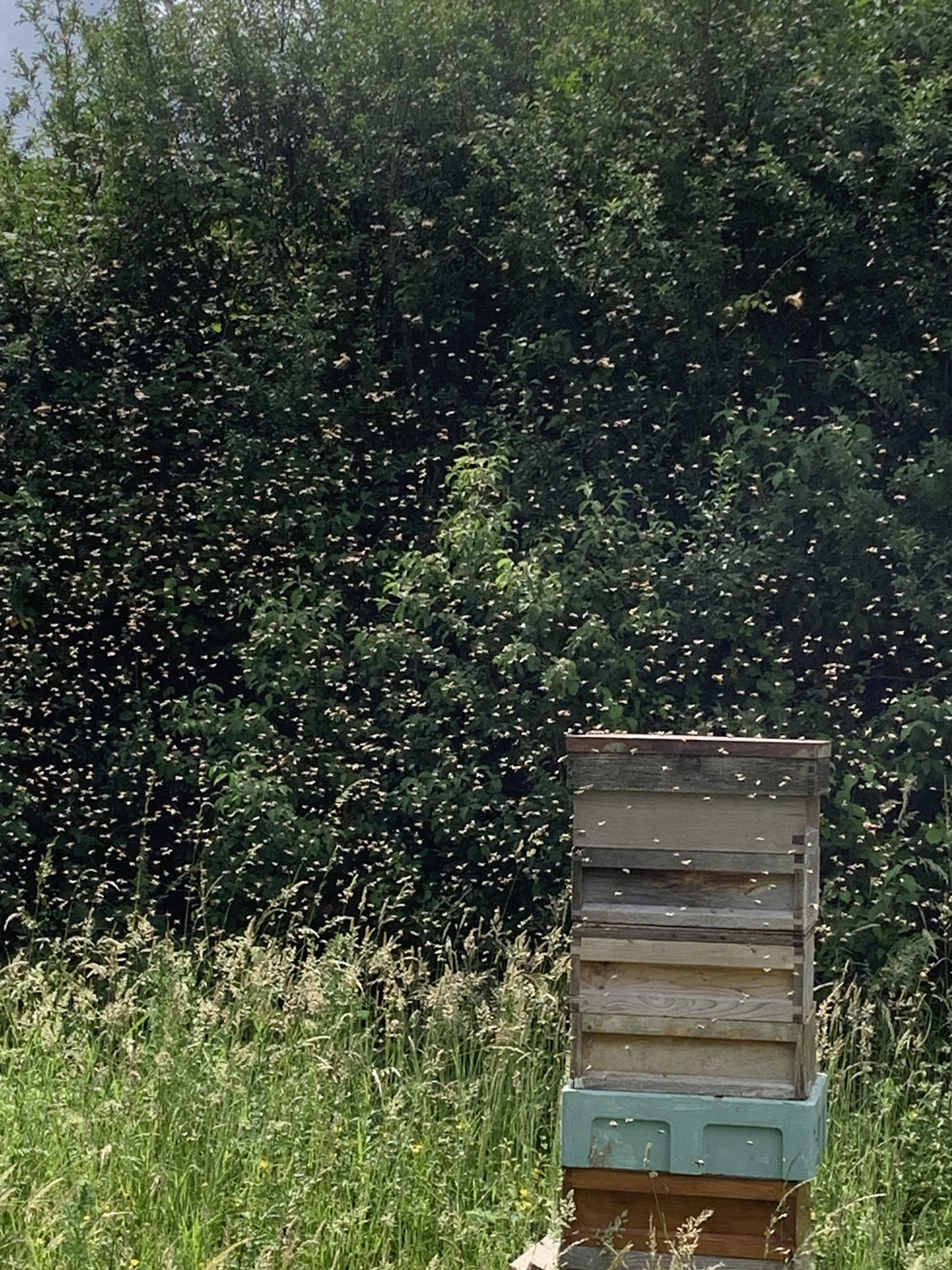
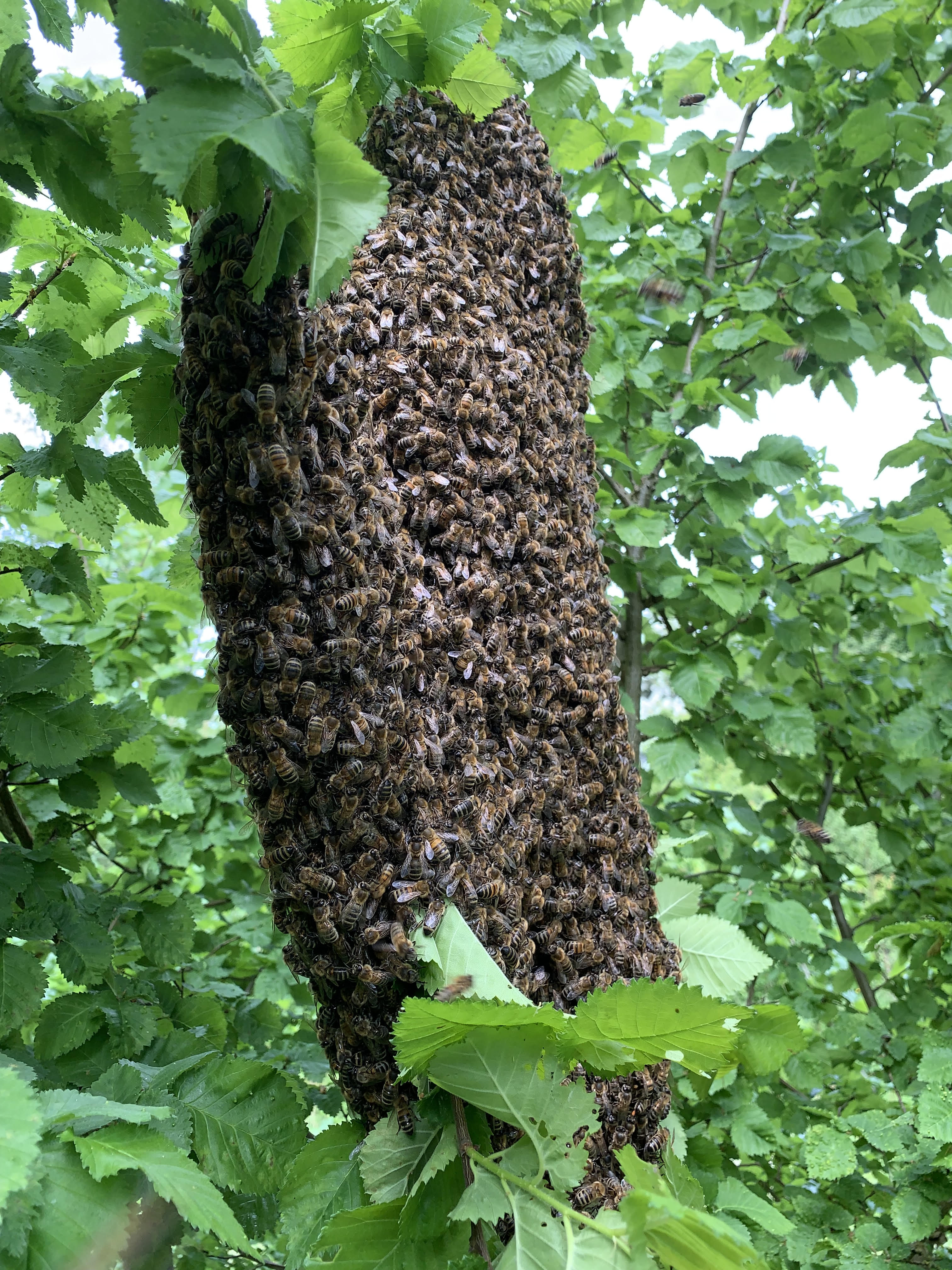
This primary swarm erupts from the hive in a surging cacophony and bivouacs in a convenient spot, not far from the original nest for a day or more, whilst a few hundred forager bees scout an area of about 70 km2 to look for a new nest site. They will locate maybe a dozen or more potential sites, evaluating each one by specific criteria, and then democratically select the best site for the new colony. Shortly after selecting the new home, the bees move en masse to their new nest a couple or more miles away.
How do honeybees choose a new home?
The process of locating a new nest site starts about three days before the swarm emerges. Older foragers become scout bees and switch to finding a new nest site. 1Research shows that the scout bees are looking for a cavity of about 20 to 80 litres, with a small entrance at its base, preferably about 5m off the ground. A cavity that has had previous honeybee occupants is considered a des res, since if there is wax comb, they can reoccupy and allow the queen to start laying earlier. The teenage worker wax building bees gorge themselves on honey prior to swarming and can produce large quantities of wax in a short space of time, to build comb on entering a new nest site and allow the queen to start egg laying quickly.
Sometimes honeybees decide man-made cavities make the perfect new nest site. Cavities in the walls via an air brick, in the roof, behind wooden panelling or even the chimney are favoured spots. Whilst many property owners are happy to live with their new tenants, not everybody is keen. Removal then becomes problematic and potentially expensive if professionals need to be involved. A ‘cut out’ of the bees, honey and comb is required from the cavity. A sticky job.
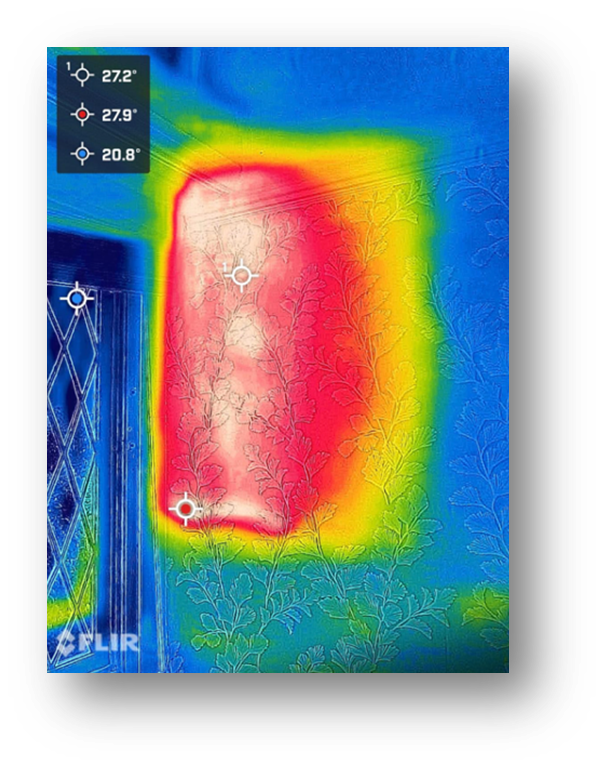
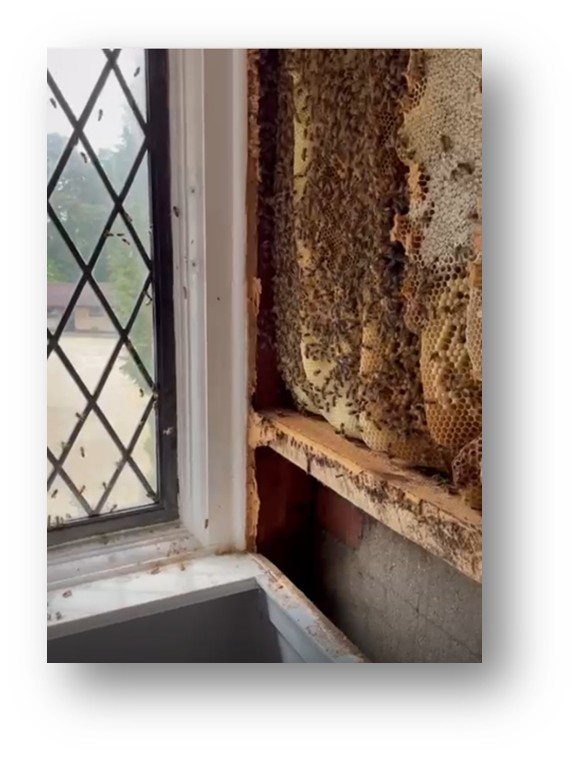
In the example below the nest in the house was located using a thermal imaging camera, a section of the plaster wall removed to reveal the nest in the cavity and then the bees, wax and honey were removed.
Democratic honeybees
Having located a potential nest site, the bivouac ball of bees in the garden now becomes the seat of democracy. The scout bees will examine the new cavity thoroughly to check its credentials as a new home, before returning to the swarm and waggle dance on the surface to recruit other foragers to go and look at the site. If the recruits agree then they will return to the swarm and perform the same dance. Whilst there may be many different dances occurring on the surface of the swarm, consensus is reached when twenty to thirty bees are visiting a particular site. Amazingly scout bees will also perform a ‘stop’ signal on other bees performing a different dance, in the way of a ‘head butt’ vibrational signal. Whilst it may take several head butts, the dancer may stop its dance.
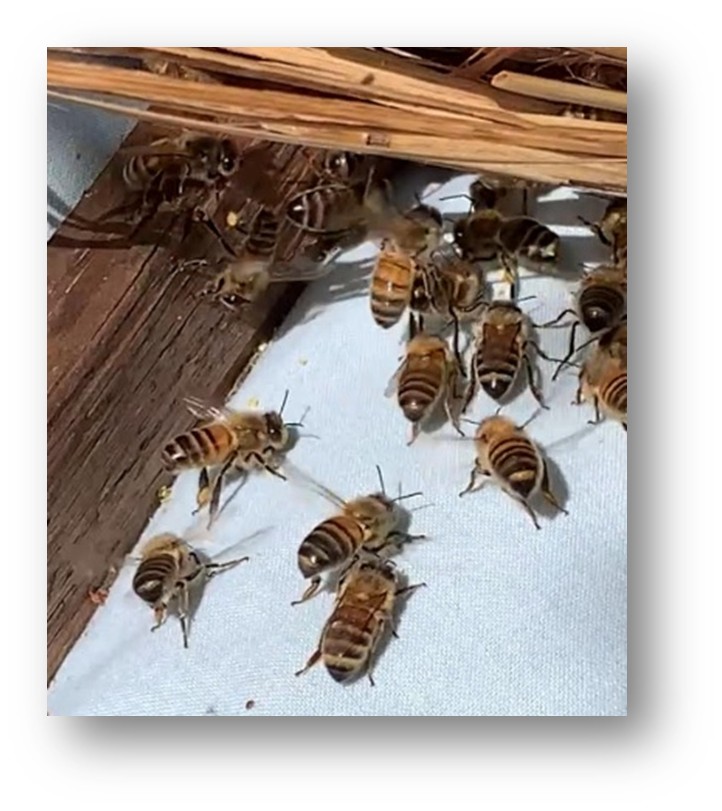
The scout bees perform piping signals on the surface of the swarm cluster, which encourages the non-scout bees to warm up their flight muscles to 35oC, the critical temperature for flying. The scout bees also perform buzzing runs, running excitedly amongst groups of bees with wings outspread. As a mass they take off from the bivouac site, hover briefly and then move towards the new nest site. The resourceful scout bees steer the swarm through a pheromone, a chemical messenger, released from their Nasonov gland, at the end of their abdomen, plus the queen’s own pheromones.
The scout bees also alight at the entrance to the nest site and encourage the swarm to enter the nest with more wafted Nasonov pheromone to ‘come and join us’.
Swings and roundabouts
The western honeybee is a key insect that has been managed by humankind for thousands of years for its honey, wax and pollination capabilities. With other pollinators it is estimated honeybees contribute c.£650 M annually to the UK economy. However, swarming is one aspect of honeybee management that can be challenging for any beekeeper, who might lose a large part of his colony and its honey surplus for that year. But it is a marvel of nature to behold and from research we have a small insight into the way honeybees swarm and locate a new home. So, if you see a swarm, don’t be alarmed. It’s normal behaviour and its fascinating. In fact, it’s amazing!
References:
Group decision making in nest-site selection by honeybees
Seeley, T and Visscher, PK; Apidologie 35 (2004) 101-116, 2004
 Welcome to Buntingford Bees