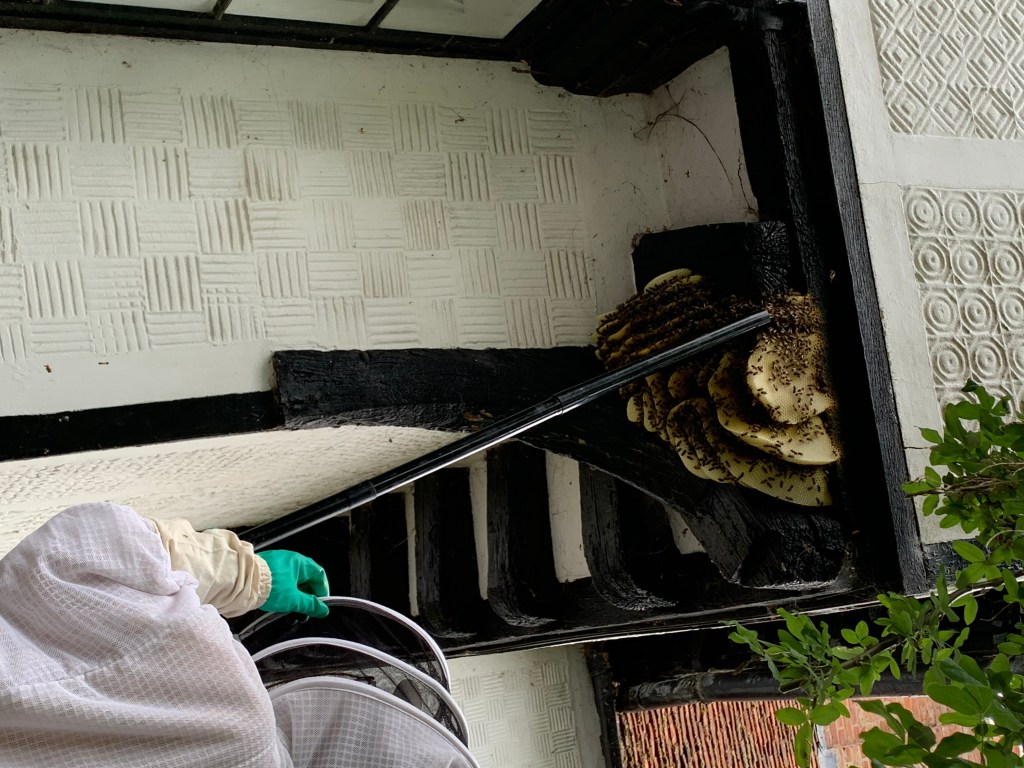
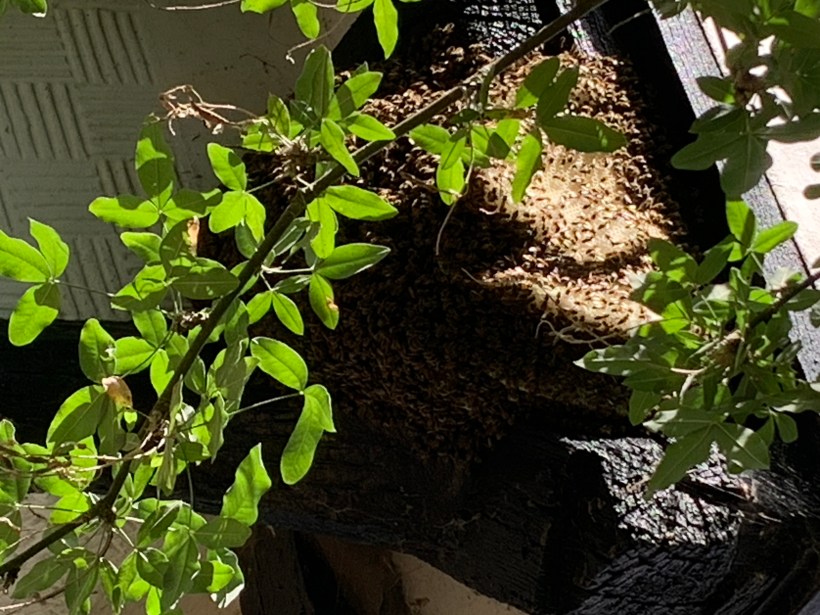
Had a very interesting Friday. This rather unusual and very large honeybee nest was seen under the overhang of a local house. Honeybees usually build a nest in a cavity, but I’m seeing more like this, I think due to climate change. Left alone we didn’t think they’d survive winter.
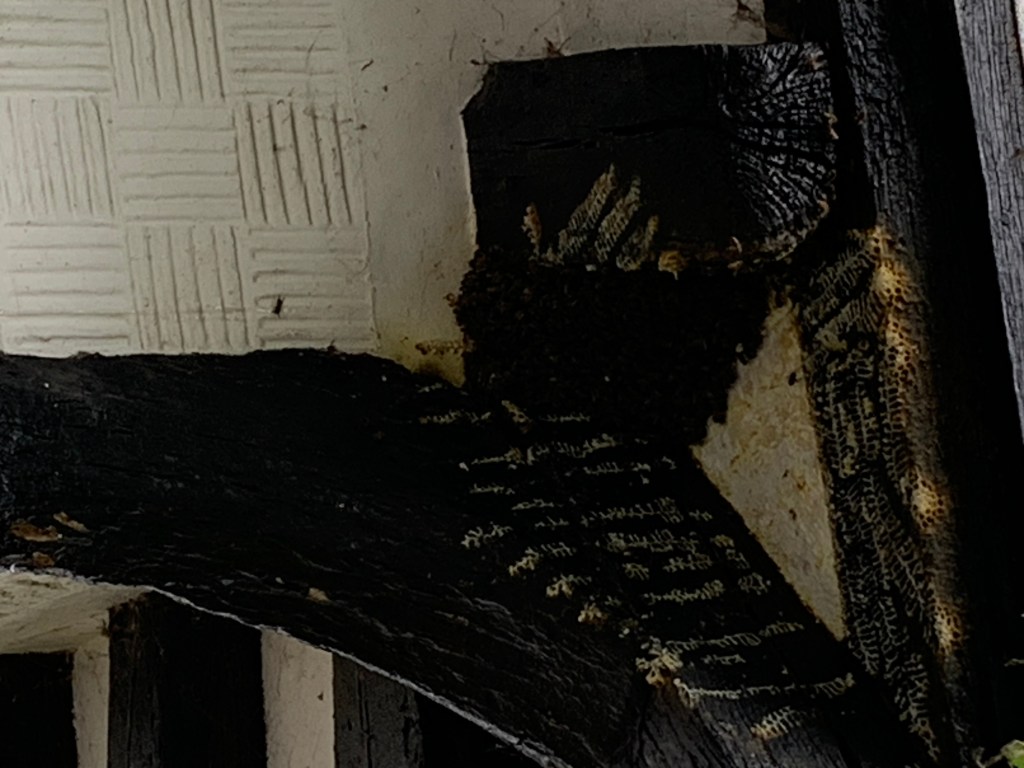
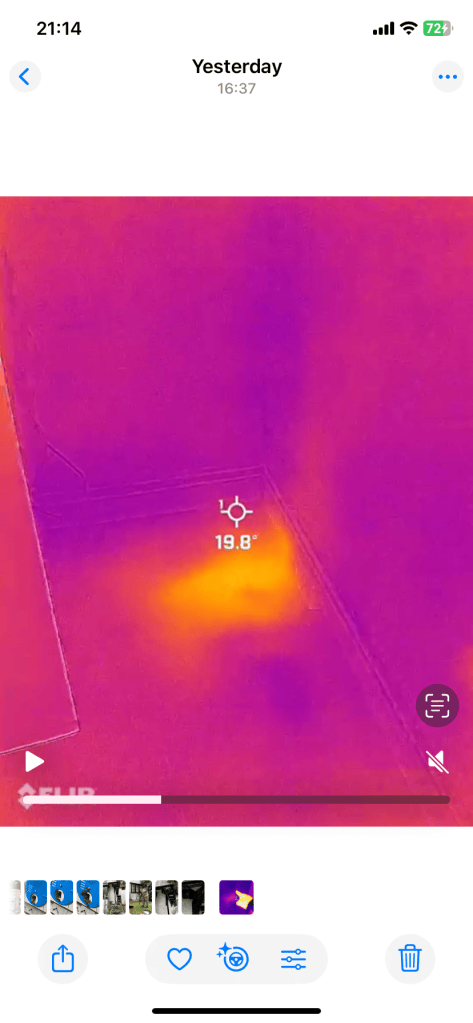
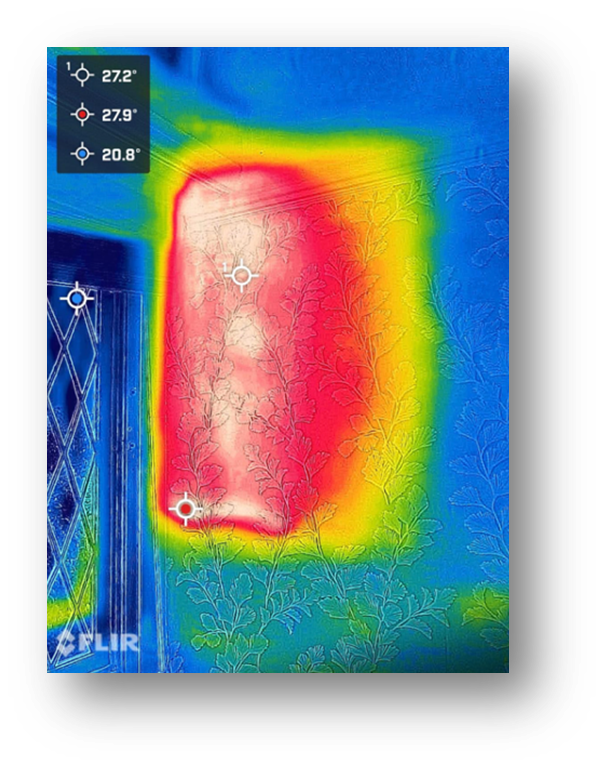
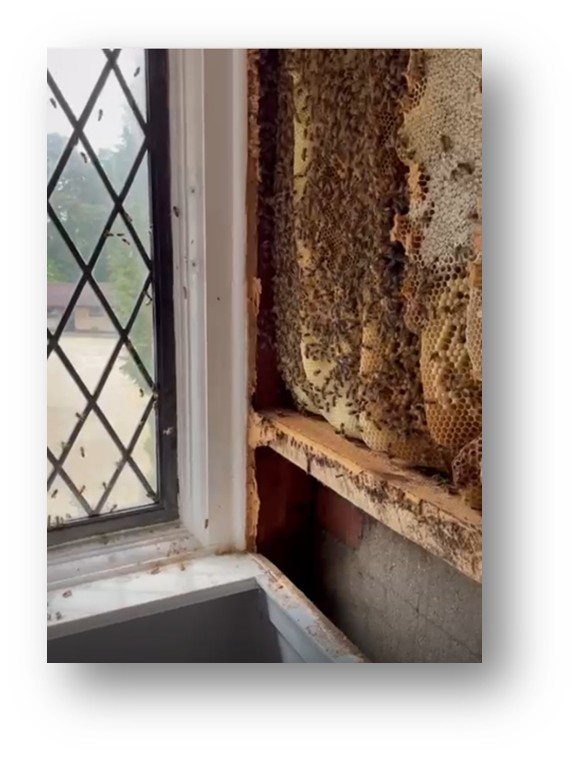
With bee buddies Jim and Allison and support from the Wildlife unit of East Herts police to help avoid members of the public being stung, we gently removed the bees and the comb. Very sticky job! However the bees had the last laugh. Behind all the comb was a small hole, leading to the main nest underneath the floor boards of the first floor. You can see an infra red image of the nest in the photos. That was some colony! We will leave them to the spring and see what occurs.
This past week I have been attending the 94th National Honey Show [NHS] in Esher Surrey. I have attended an odd day for the past two years, but this year during my full retirement first year, I opted to help steward for the full four days. A great experience learning lots from those who regularly display their honey, wax blocks and comb honey and aghast how clever people are with their display creations.
I haven’t been brave enough to enter any of my honey or wax into the NHS competition classes yet, but I have entered the written classes which included this year a short article on ‘a beekeeping topic of interest to the public’. This year I chose honeybee swarming and you can find my entry below:
The Wonder of the Honeybee Swarm
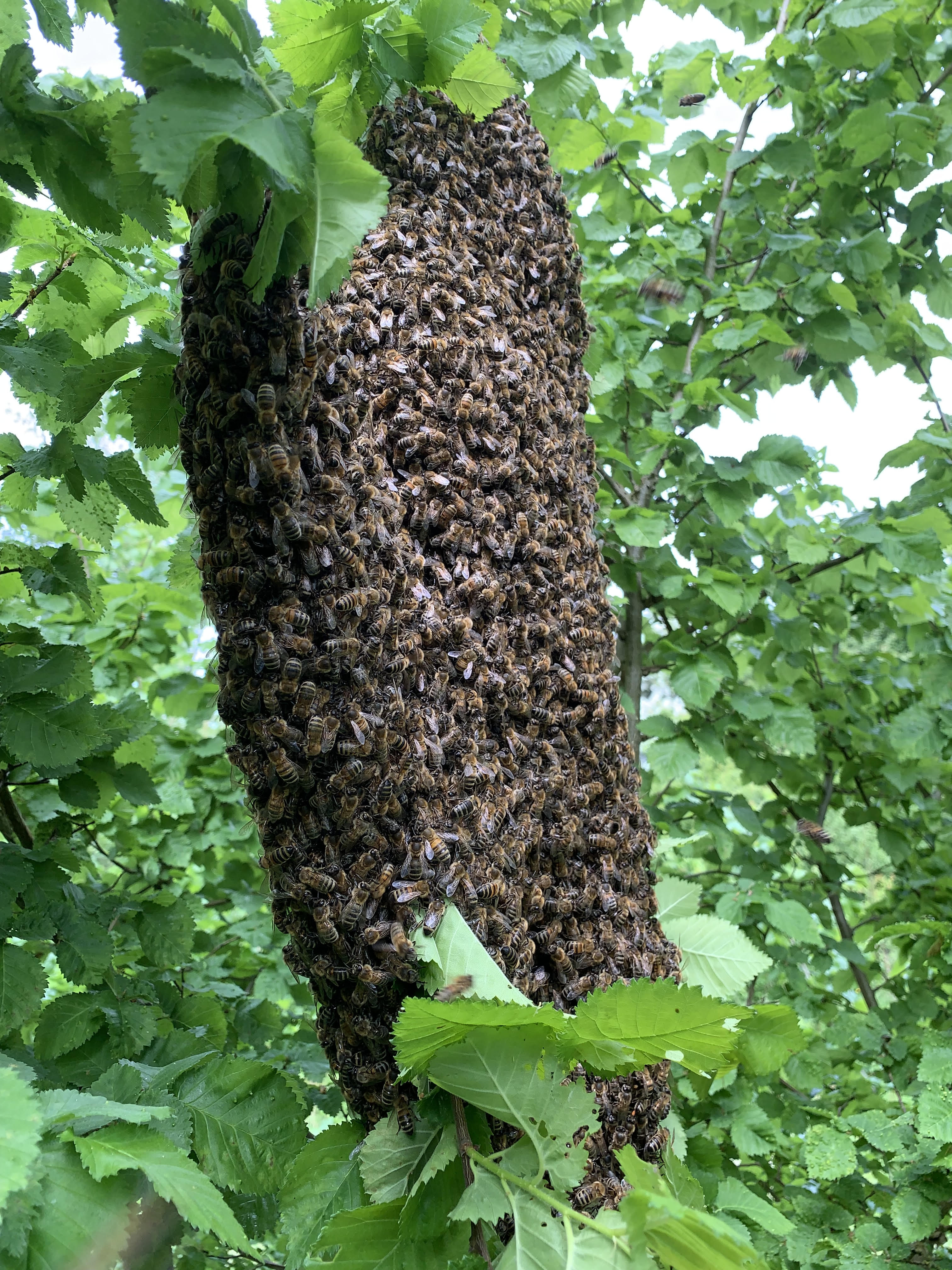
Each spring beekeeper swarm collectors receive panicked ‘phone calls from householders, “Help! I’ve got lots of bees in my garden. Can you remove them for me?” With thousands of bees in the air the householder may not appreciate it, but they are witnessing a wonder of nature, a honeybee swarm. This swarming behaviour is the unique way in which a honeybee colony reproduces and chooses a new home in the process. A behaviour that has contributed to the success of the western honeybee, which originated in Asia and over millennia spread into Europe and Africa.
What is swarming and how do honeybees select their new home?
Honeybees have evolved a different pathway to reproduction than other social insects, such as bumble bees or wasps. When the colony is at its peak in population, running out of space in their nest, the old queen leaves the colony with 10,000 – 20,000 of the colony’s workers to start a new colony, leaving behind a new queen.
This primary swarm erupts from the hive in a surging cacophony and bivouacs in a convenient spot, not far from the original nest for a day or more, whilst a few hundred forager bees scout an area of about 70 km2 to look for a new nest site. They will locate maybe a dozen or more potential sites, evaluating each one by specific criteria, and then democratically select the best site for the new colony. Shortly after selecting the new home, the bees move en masse to their new nest a couple or more miles away.
How do honeybees choose a new home?
The process of locating a new nest site starts about three days before the swarm emerges. Older foragers become scout bees and switch to finding a new nest site. 1Research shows that the scout bees are looking for a cavity of about 20 to 80 litres, with a small entrance at its base, preferably about 5m off the ground. A cavity that has had previous honeybee occupants is considered a des res, since if there is wax comb, they can reoccupy and allow the queen to start laying earlier. The teenage worker wax building bees gorge themselves on honey prior to swarming and can produce large quantities of wax in a short space of time, to build comb on entering a new nest site and allow the queen to start egg laying quickly.
Sometimes honeybees decide man-made cavities make the perfect new nest site. Cavities in the walls via an air brick, in the roof, behind wooden panelling or even the chimney are favoured spots. Whilst many property owners are happy to live with their new tenants, not everybody is keen. Removal then becomes problematic and potentially expensive if professionals need to be involved. A ‘cut out’ of the bees, honey and comb is required from the cavity. A sticky job.
In the example below the nest in the house was located using a thermal imaging camera, a section of the plaster wall removed to reveal the nest in the cavity and then the bees, wax and honey were removed.
Democratic honeybees
Having located a potential nest site, the bivouac ball of bees in the garden now becomes the seat of democracy. The scout bees will examine the new cavity thoroughly to check its credentials as a new home, before returning to the swarm and waggle dance on the surface to recruit other foragers to go and look at the site. If the recruits agree then they will return to the swarm and perform the same dance. Whilst there may be many different dances occurring on the surface of the swarm, consensus is reached when twenty to thirty bees are visiting a particular site. Amazingly scout bees will also perform a ‘stop’ signal on other bees performing a different dance, in the way of a ‘head butt’ vibrational signal. Whilst it may take several head butts, the dancer may stop its dance.
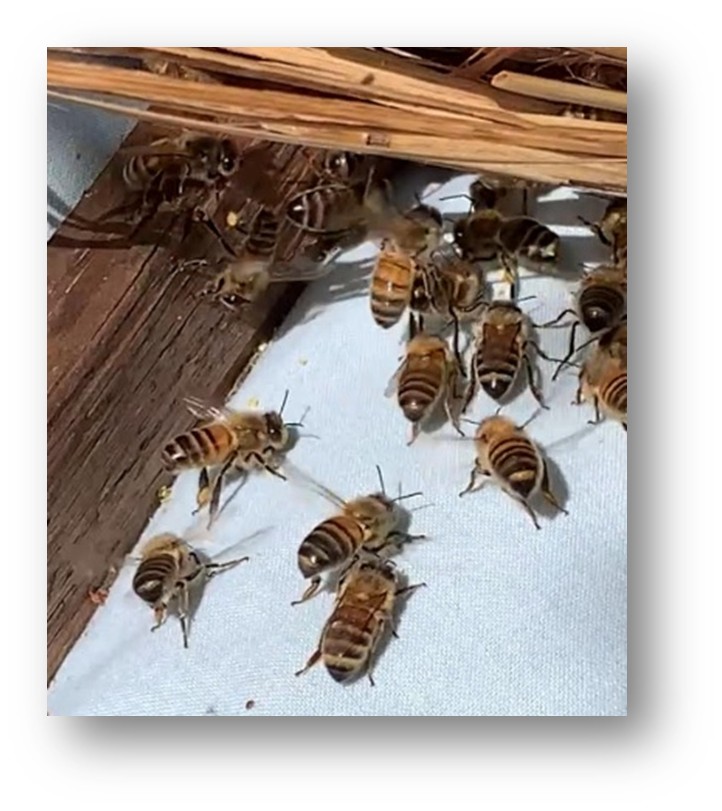
Nasonov glands exposed releasing the’come and join us’ phermone.
The scout bees perform piping signals on the surface of the swarm cluster, which encourages the non-scout bees to warm up their flight muscles to 35oC, the critical temperature for flying. The scout bees also perform buzzing runs, running excitedly amongst groups of bees with wings outspread. As a mass they take off from the bivouac site, hover briefly and then move towards the new nest site. The resourceful scout bees steer the swarm through a pheromone, a chemical messenger, released from their Nasonov gland, at the end of their abdomen, plus the queen’s own pheromones.
The scout bees also alight at the entrance to the nest site and encourage the swarm to enter the nest with more wafted Nasonov pheromone to ‘come and join us’.
Swings and roundabouts
The western honeybee is a key insect that has been managed by humankind for thousands of years for its honey, wax and pollination capabilities. With other pollinators it is estimated honeybees contribute c.£650 M annually to the UK economy. However, swarming is one aspect of honeybee management that can be challenging for any beekeeper, who might lose a large part of his colony and its honey surplus for that year. But it is a marvel of nature to behold and from research we have a small insight into the way honeybees swarm and locate a new home. So, if you see a swarm, don’t be alarmed. It’s normal behaviour and its fascinating. In fact, it’s amazing!
References:
Group decision making in nest-site selection by honeybees
Seeley, T and Visscher, PK; Apidologie 35 (2004) 101-116, 2004
(This was an unfinished article from 2018, which has been finished in 2022!) I was reminded this evening that I hadn’t written my blog for over a year. Where does time go? Unfortunately in 2018, work got in the way of bees in the spring and the beautiful summer we experienced was so busy with the bees, that I didn’t really sit down to write anything.
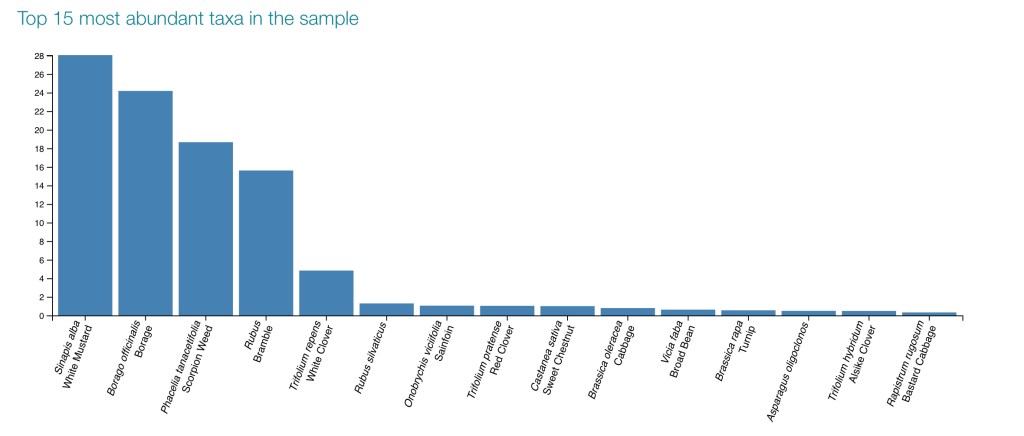
So what happened in 2018 with the bees? Well the summer was so warm that the flowers and trees kept producing nectar and the bees carried on collecting it and making into honey. I struggled to keep up with them. After a lot of long hours over the honey extractor I collected 25 x 30 lb buckets in July and August. My highest total ever. I also had time to send some off to be analysed for its pollen content. Interesting data as shown below:
Data: National Honey Monitoring scheme You can see the 15 most abundant plants that were found in my honey sample from 2018 above. Note that’s the 15 most abundant pollen samples from a much larger number.
Today was a reflective day. It was manky weather for driving, but I spent it travelling to Somerset and back, to share in the celebration of the life of a special elderly friend, who died at the grand age of 94, just before Christmas.
Vera, or Frankie as we knew her, was a real nature-loving, shotgun-owning, country woman and a big influence on a young me. A farmer’s daughter and land army girl during war years, Frankie had been a head gardener at local estates near Yeovil and in the 1970s owned a market garden and provided flowers to local florists and salads galore to the Rice family. Not only that, she provided cabbage plants to my dad for his veg patch. How my sisters and I hated heeling-in cabbage plants. Not more Frankie!
Frankie and my dad had became friends when as a young police constable in the 1950s (his first stint in Yeovil) he would spend his time walking the beat, and receive a welcome cup of tea from the local florist. Having completed a cabinet makers apprenticeship, dad was handy with his hands and helped Frankie build wooden sheds on her newly acquired land (in fact years later, his tenon saw, with his name etched into the handle, was found on a roof!) Some of my summer holiday weeks were spent working at that market garden, learning to weed and helping to push the enormous greenhouses into place on their rails. Work was rewarded with more salads and tomato plants.
Frankie loved dogs, wired hair fox terriers, who provided such entertainment when adults talked so o o much. Unwittingly, she even taught me about diversity, as Frankie’s partner, Phyllis Partridge, kept their home and made such wonderful cakes for Sunday teas. As far as a ten year old me was concerned, they were just two special old ladies, who shared a home for companionship. There was always laughter when we were at Frankie and Phylls house for tea.
So, why is Frankie mentioned in a beekeeping blog? It was Frankie who influenced my dad to start keeping bees and we housed our first bees at that market garden.
Thank you Frankie. You were a special friend to many.
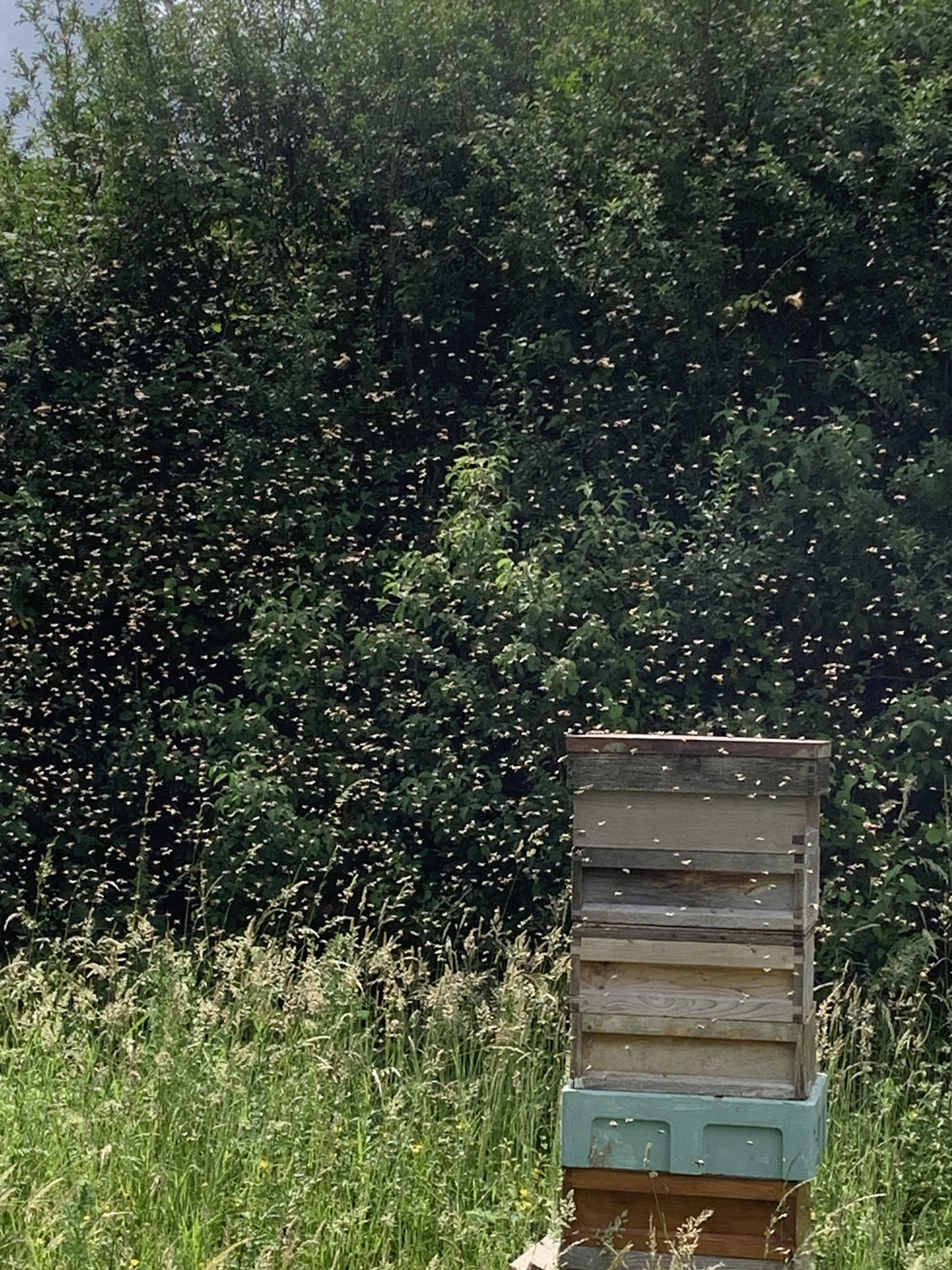
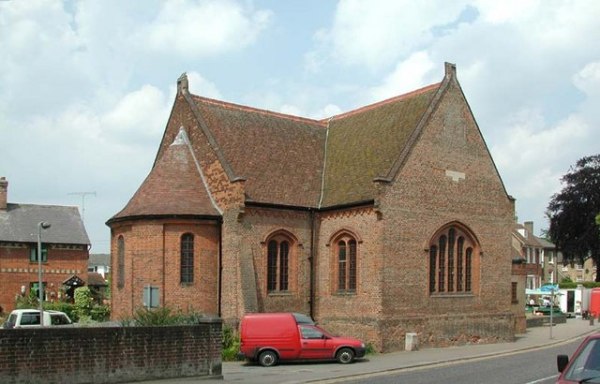
St. Peter’s church Buntingford, as well as a place of worship, has the honour of being the second oldest brick-built church in the country (built between 1614-1626). Whilst it is grade 2 listed, in my humble, non-architectural opinion, it isn’t a particularly impressive building (but of course that’s not important, a church being the people). However nestling up in the eves, where the outside vertical walls meet the roof, a feral colony of bees has existed for at least two years. How do I know this? Well for the past two years it has thrown (technical term) a number of swarms into the same two gardens that are a short distance away.
Last year one elderly resident paid for a pest controller, who rather sadly destroyed the swarm. This year, £40 lighter in the pocket he could no doubt ill afford, the same owner asked the church to remove the source. Unfortunately removing bees from a building fabric is not easy, especially when it’s a listed building and thirty or forty feet in the air. Unless you can access the actual nest, involving the removal of roof tiles and goodness knows what else, bees leaves behind wax, honey and young bees (brood), which attracts wax moth and the next swarm that passes by. Much better to leave them if possible, as bees will not cause damage to the fabric, unlike wasps. Therefore as a compromise I offered to remove any swarms for free that ventured near his garden. Little did I know what excitement was in store!
Two weeks ago I got a call from Chapel end adjacent to the church, to say a swarm had landed in a bush in a neighbours garden. Easy-peasy I thought. How wrong I was. Three nights later I finally managed to persuade HRH and her entourage to enter a small hive with some added honey as a treat, having tried unsuccessfully each evening on three successive days to shake, cajole or otherwise without damaging said bush. Mission accomplished?
This week yet another swarm emerged from the same ecclesiastical source, this time into the “wrong garden”, hanging from a clematis. Whilst at a height that wouldn’t require me swinging from a ladder, bees being bees they decided to spread themselves along a 15 cm section of stem and leaf. I was able to shake some into my straw basket (skep), but the remainder proved elusive. Brushing them wasn’t effective, bees flying off and then relanding in the same place. How could I collect them? Then I struck on an idea. Bees will naturally walk uphill, so I held my skep with some bees above the remaining cluster and blow me, they started to walk, even run, up into it!
Elusive bees
I took a video, because I didn’t think you’d believe me. See it here.
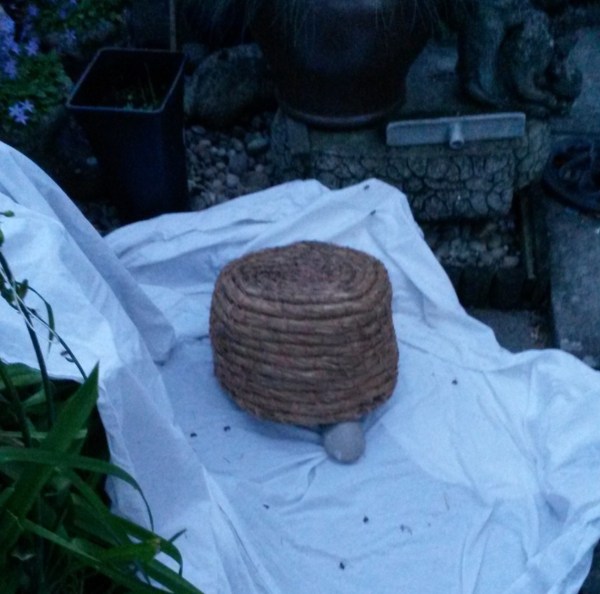
Having got 70% of the cluster into the skep I placed it five feet away, on an old spread out sheet, and soon bees were fanning their Nazanov glands, sending out welcoming pheromone scents to their sisters (and some brothers) to come and join them. Amazing. Within 45 minutes all the bees had moved into the skep, sheet wrapped over and I was then able to move them to their new home a couple of miles up the road.
Those of you with some knowledge of honey bee biology are wondering why a colony has thrown two swarms in a week and how is it possible? Well when bees are cramped in their colony this stimulates them into making new queen cells. But they don’t just make one, they can make dozens, all from different ages of larvae. When the first queen cell is sealed, at nine days, the old queen leaves with a large percentage of the foraging bees. This is the primary swarm, which can be enormous. However new queens are emerging at a rate from day sixteen and contrary to popular belief the first queen doesn’t always go around destroying her sisters, but may leave the colony in a smaller “cast” swarm. The queen will be a virgin. These swarms are less likely to survive, but I’ve always assumed it is the bees “just making sure. Soon the swarm were safely tucked up in their new polynuc. But that wasn’t the end of the story.
A week later, whilst driving back from Leicester, I took a call (hands-free) from the same elderly resident. Guess what? Yet another *swarm in an identical location! Unfortunately by the time I was home they had flown, but what attracts bees to the same swarming site? I had the same thing a few years ago when a swarm went into the same garden compost bin two years running. Some have suggested Ley lines. Whilst I’m a believer in an almighty creator God, I’m less sure about lines that criss-cross the planet connecting places of geographical interest. However a very well respected beek, who also dowses, says he checks every time he takes a swarm and there is always a Ley line involved. Reckon he might have caught a bit too much sun or is there a connection?
Like most things in life, beekeeping has its disappointments as well as its many joys.
I’ve been busy fetching swarms recently, at one point receiving on average three ‘phone calls a day, with both honey and bumble bee enquiries. It’s done for free, as a public service, as to some having 20,000 bees in the garden is scary. I can’t imagine why. Well I suppose the drones do make a lot of noise when they arrive, like adolescent school boys showing off to the girls. Sometimes I can’t help, such as when they’ve settled too high, or gone into a chimney or roof space.
It was during one recent swarm collection visit that I experienced a massive high and a rare down moment all in one. I was called to a garden I’d visited last year for a swarm, in fact in the same beech tree! There was the biggest prime swarm I’d ever seen. A prime swarm is the first swarm of the year, when the mated queen leaves the nest with about 50% of the nest population. All I can say is it must be a large nest.
“Mother of a swarm”
The swarm had appeared over the weekend, so had been there three days. Due to the heavy rain we were experiencing, the bees were tightly packed together and if my level of discomfort was anything to go by, they were wet and cold as well. The tree branches were trimmed in the name of speed and the clumps of bees gradually placed into the collection box. All done, soaked to the skin and dreaming of a hot bath, I took them back to my apiary. The bees were left with a promise that I would return the next night with some sugar syrup. However when I did return all the bees were dead in the bottom of their new home. Such a sad sight. Still not really sure why. Some friends have said overheating, yet others starvation. Ironically, the following night, once again soaked, I collected yet another swarm, but this time they survived. They had managed to stay dry in a hedge.
First honey harvest of 2017
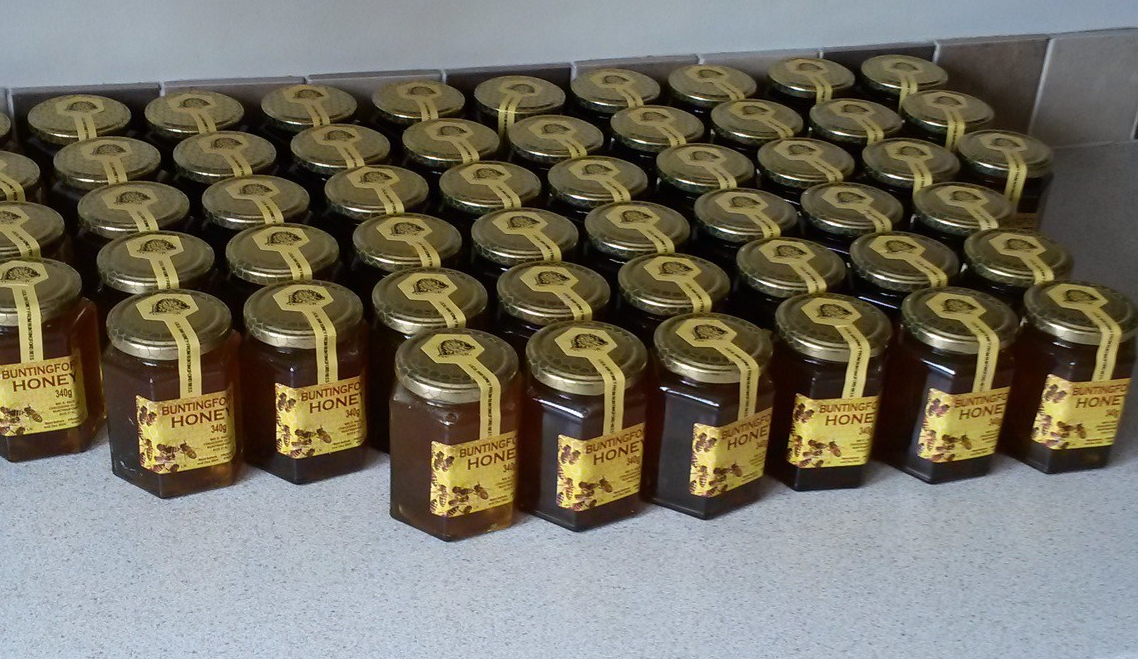
In between swarms, the bees have rewarded our love and care with the first honey harvest of the year. The weather is very warm at present and the nectar is flowing, so much so I’m having trouble keeping up with them.
New home for humble bumbles
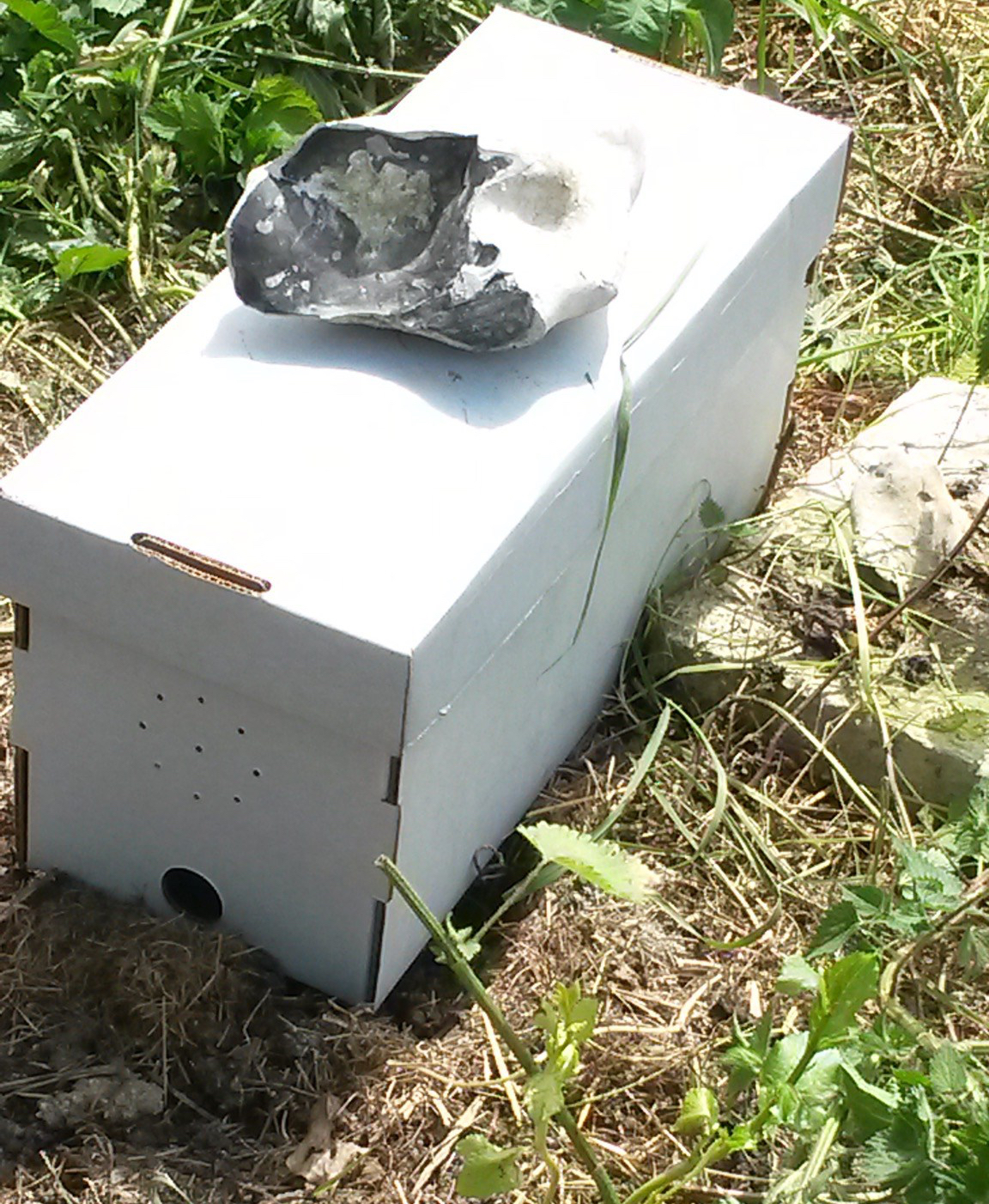
Another amusement this time of year are the ‘phone calls “I’ve got bees in my garden!” [Well that’s good isn’t it.] “Can you come and remove them please?” The conversation then follows a similar pattern, such as: What type of bees? Where are they? Where are you? I had this conversation with a farmer yesterday. He thought they were honey bees, I realised they were humble bumbles. “Can you leave them? The nest will break down in a few months.” Transpired they were in the way of a new farm track, so I agreed to try and move them. Fortunately they were not underground but living on the surface in a wood pile and grass mowings. Beautiful yellow bands around their necks and buff bottoms (Bombus terrestris I think). Long story short, the bees were transferred into a waxed cardboard box and were soon flying in and out. Come 9:30 pm (dusk) the odd one or two were still flying, until all was silent. Popped in the bung and gently drove them to my apiary site. Hopefully they will have survived and decide they like this part of rural Hertfordshire, rather than the rural part of Hertfordshire 7 miles away they started in. We will see.
This year spring has come early. Temperatures of 25oC have been reached ’round these parts and the bees have taken advantage. Whilst the temperatures in the past week have lowered to a moderate 12-15 oC, more of a seasonal average, my hive records from last year show the colonies built up slowly, following a very mild winter and didn’t really get going until late April. Interestingly having experienced a proper cold winter for once, the amount of blossom this spring is the most I’ve seen it for some years. It’s Easter Monday and all bar two colonies are now on double brood and raring to go.
We need more space please
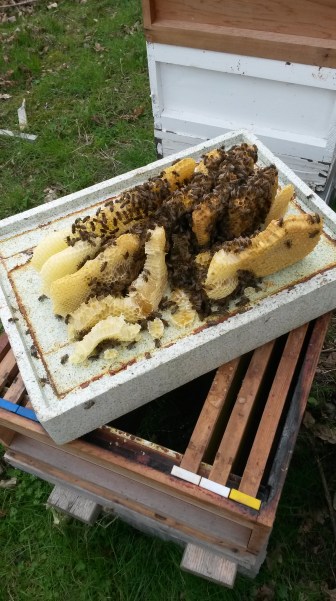
One over-wintered nuc needed more space and had a great way to show me it was time to transfer from its polystyrene home to a new brood box. They built wild comb. Beautiful architecture.
I took advantage of the expanding brood nests to take two busy colonies down the road to some flowering oil seed rape. One of the colonies was selected because it has a reputation for being prickly. It’s similar skills to dealing with grumpy teenagers. Treat them with kid gloves and put them as far away as possible from people!
Due to the area a worker bee forages there is a rule you move a colony three feet or three miles. I have another summer apiary site which is actually slightly less distance than this, but farmer Ben is so careful to spray only when he needs to or only at the right times of day, that the opportunity to feed on some oilseed rape (OSR) is too much to resist. Given the right conditions OSR produces vast quantities of pollen and nectar. Pollen is the bees source of protein and essential lipids, which they feed brood. In my opinion the honey isn’t a great taste but it makes a great blending honey.
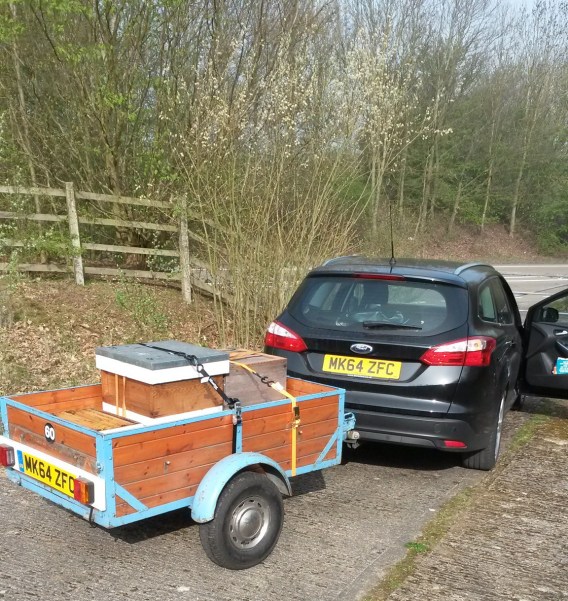
All loaded up and ready to roll
Moving bees can be quite a traumatic experience. Not only can a hive come apart or a gap appear at the entrance, releasing bees to fly around, they are also susceptible to vibration and over heating. For this reason I’ve tended to move at night. However this is not without its potential trauma, tripping over the slightest twig in the dark. I also have the recurring nightmare of being stopped by the law for appearing as a Ku Klux Clan cult character dressed in white beesuit. So this time I closed up at night, but waited until early morning to move. It worked well. Bees delivered to their new home. A few returned home, but I placed a small nuc on each of the original sites to capture any returning foragers. They have to beg their way into another colony, usually succeeding without a fight.
At the Angus apiary all the colonies now have a super to collect honey. Hopefully this strategy will yield some early season honey and colonies ready to start some queen rearing.
The first inspection in spring is always eagerly anticipated by beeks. Weather forecasts are scanned for weeks beforehand, a sense of anticipation builds on the online forums, pieces of seaweed hung up on nails and pine cones studied until the temperature creeps above 13oC. The rule of thumb is when it is warm enough to go outside in your shirt sleeves, you can carry out the first inspection. Today was such a day!
All my colonies survived winter and have been eagerly bringing in bright yellow pollen from the local willow trees and more recently orange / yellow as the first dandelions poke their heads up through the earth. However today was the first peak into the brood boxes. These are the larger boxes where the queen lays her eggs, which then undergo a truly miraculous transformation over the next 21 days until they emerge as a young adult worker bee (or 24 days if you’re a blokey drone).
Some hives were stronger than others, with three colonies having 7 or 8 (from 11) frames of brood! It’s only March. These needed a second brood box added, with more space for the queen to lay, as I like to build strong hives for the late spring / early summer honey flow and to prevent congestion, a factor in swarming, which we want to avoid. Very early season indeed.
Having inspected my hives I went off to Westland Green, where the Association apiary is housed. My job was to set up an observation hive to help a researcher Liz and her PhD project at Royal Holloway College. Liz is studying the waggle dances of bees in London and rural areas, to understand the distances bees have to travel to forage and to see if there is a difference between urban and rural areas. Liz goes to Westland Green and countless other places, to film the bees in the OH. The videos are then analysed and deciphered by clever computer algorithms to show travel distances. Liz will be studying the bees throughout the summer.
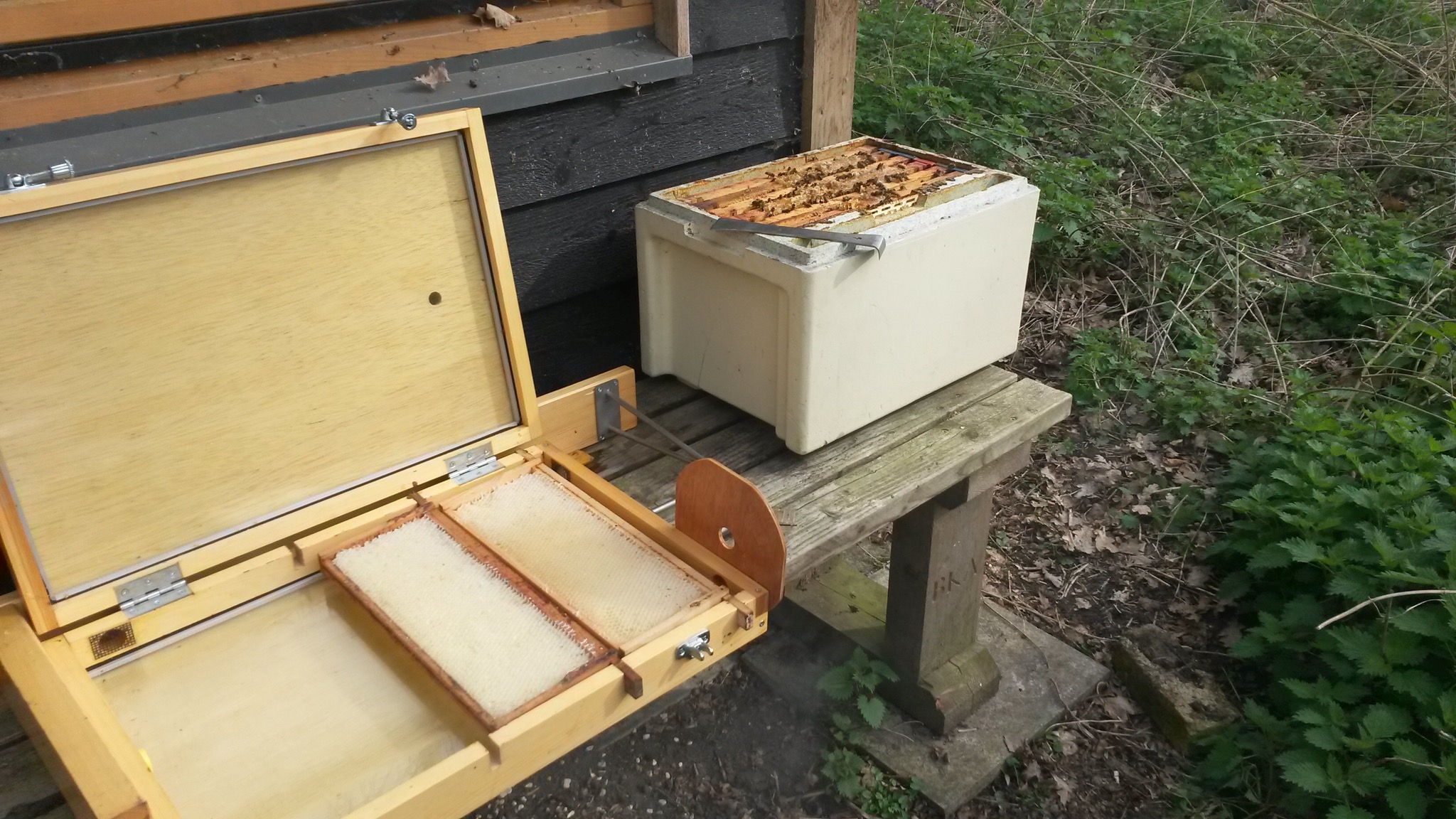
You can see the observation hive (OH), which looks like a giant book, hinged on one side. The photo shows the hive before any bees are added from the small nucleus (nuc) on the right.
So this is my blog about bees and beekeeping. The question I’ve been asking myself, the past three days, is how to work into my post a splendid three day short break in Barcelona, Spain, with my good lady wife Anne, the lady “who is not amused* ” by bees or other creepy crawlies. I decided the way to do it was see how many bees or bee-related themes I could spot during our travels.
Arriving in Barcelona was a shock to the system. We’d prepared for 10-12 oC. We got 15-20 oC. Blooming warm for February. Thinks, if this was Buntingford the bees would be flying and foraging! No sign of bees flying in Barcelona, but then, there seems little forage around and no trees with pollen-bearing catkins that we can spot [you can tell when you’re a bee-geek (beek) as you look for apiary sites or potential forage sites wherever you go].
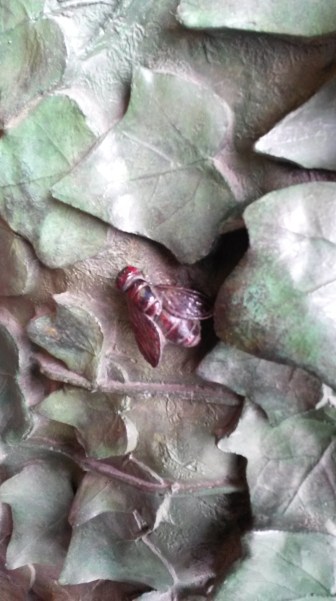
Thursday we walked to the magnificent La Sagrada Familia, Gaudi’s masterpiece cathedral, still being built and due for completion in 2026, 100 years after his death. It’s here I spot my first bee in the most unlikely place, inlaid into one of the doors, underneath the Passion facade.
My first Barcelona bee!
Having played the tourist for several hours we decided a drink was in order. Rather partial to a dark draught bitter, we usually struggle when in Central Europe. Not in Barcelona as we found the local craft beer brewery, itself rather dark, but very enjoyable none the less. After a small 35cl of the local “darkfuneral“, (the beer’s name) coming in at 8% vol, I was ready to see bees anywhere. Sure enough I found them, in the flooring, but thankfully from an upright position.
On the way back to our hotel we walk down Las Ramblas, a bustling street in the heart of the city. I particularly wanted to revisit the market, full of fish, meat, fruit and eateries. Were there any bees though? We found several stalls selling a range of honey, but with no indication of the origins, we declined to buy. EU honey labelling regulations clearly don’t apply here. Comb honey was €8. Looked good.
So here we are Friday, sitting in the airport, waiting for our flight home. Lots of things flying, but no bees to be seen. Roll on April when the weather’s the same in the UK as it has been this past week in Barcelona. A beautiful city but few bees to be seen.
Honey comb hexagons were everywhere
* In her defence she was brilliant last year helping me when I broke my elbow, putting upright a hive that had fallen over, but that’s a different story.
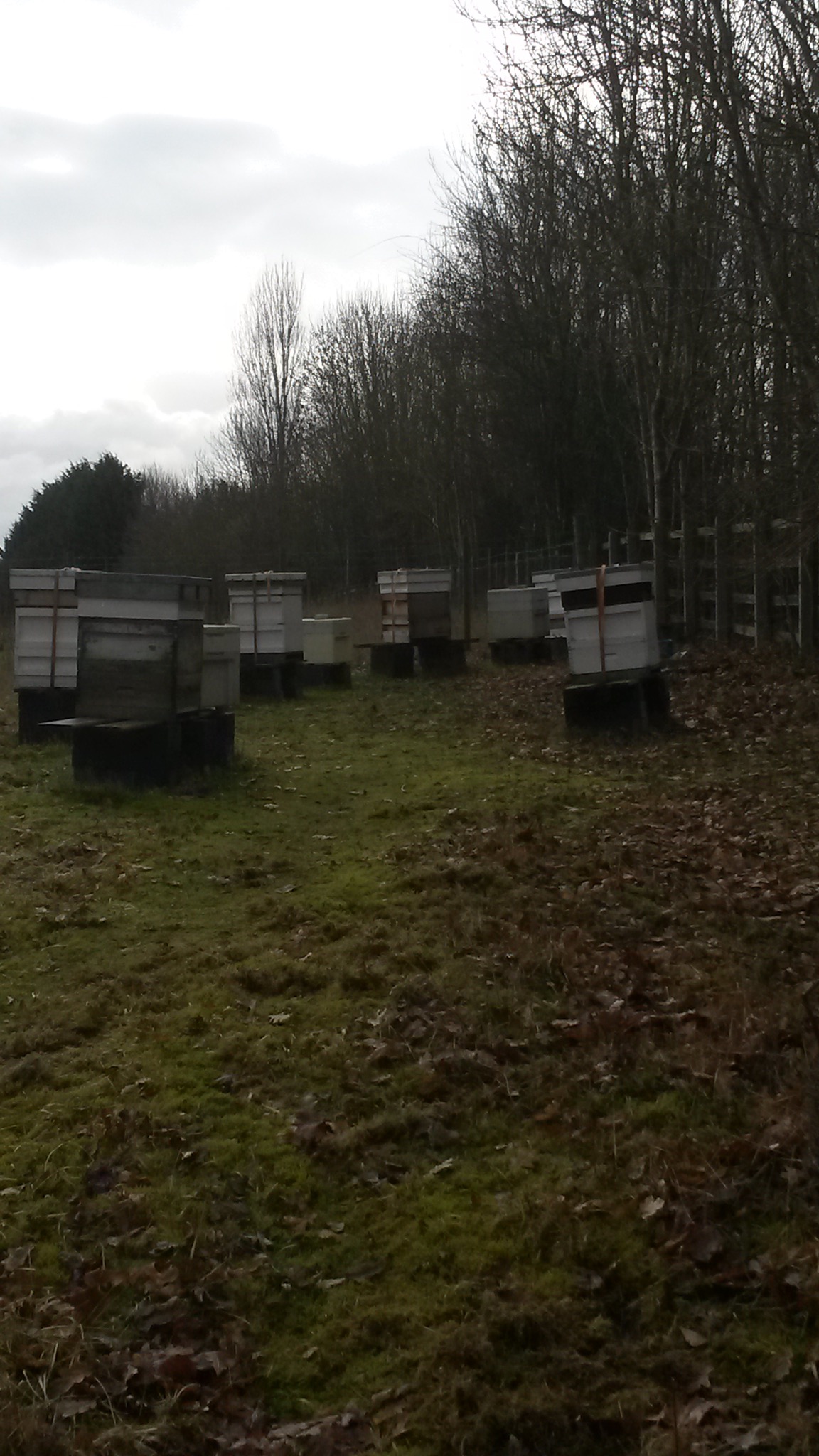
On a cold January Saturday morning I visited the apiary to check the hives were upright and had plenty of stores. From the outside all seemed quiet. Whilst bees are cold blooded, they aren’t that active during the cold weather. Time would tell.
Estimating how much stores is left is a process called hefting. You are supposed to lift the hive and know if it is light of stores of honey or not. Yeah right. It’s something I find quite difficult to do. Some people use a luggage scale but I’ve not ventured into that particular piece of technology yet, perhaps next year.
I tend to add bakers fondant to my hives in December to ensure they have enough stores. This amused the neighbours back in December when the BAKO catering man arrived with the order of ten boxes of fondant, around 125kg in total! Not all for me I might add.
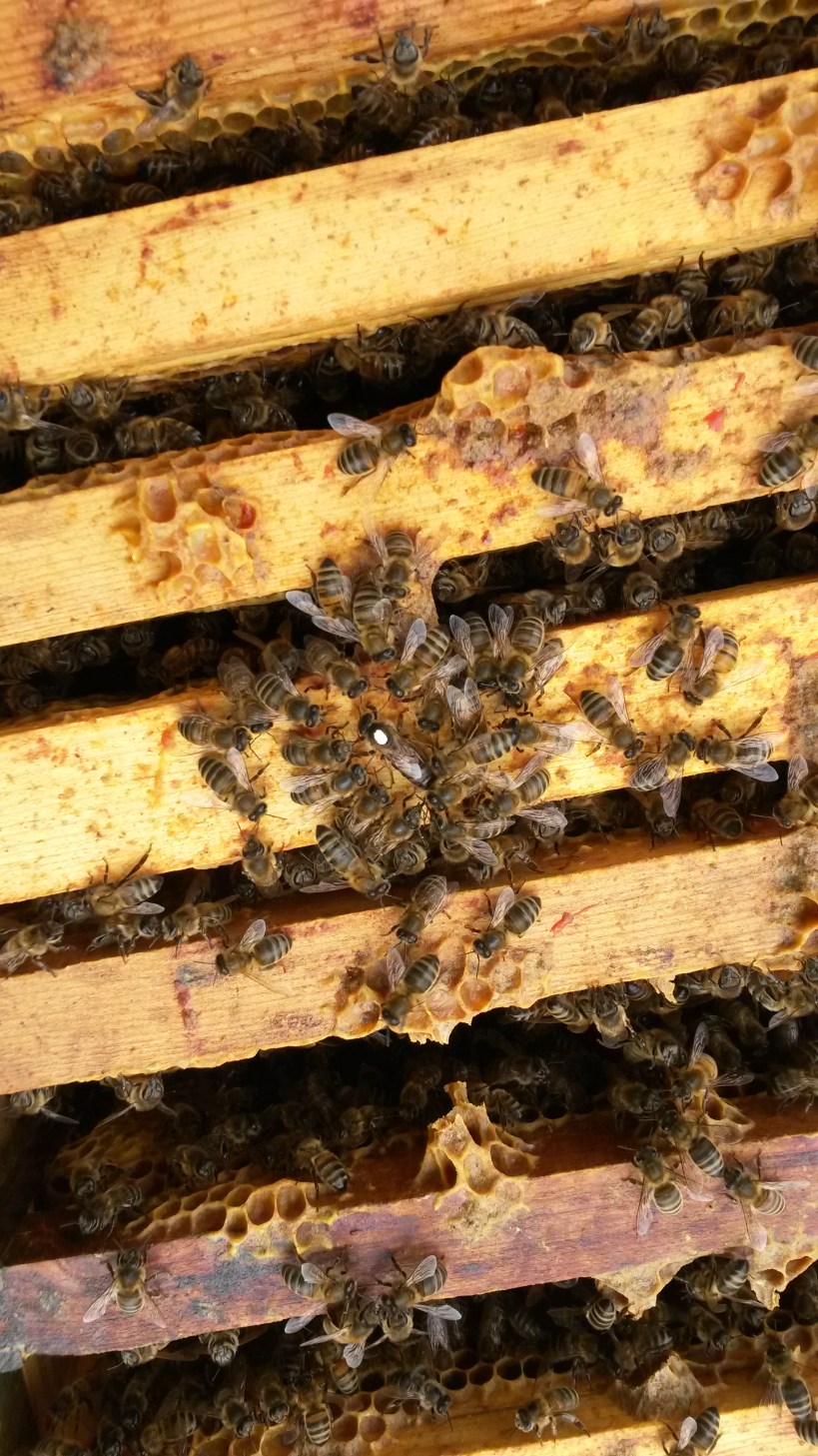
The bees tend to work upwards through their stores during the winter months, as a cluster, so if they are hungry then they’ll be at the top of the hive. A bit like children, it varies between strain of bee and how cold it has been, on how much they consume. You can see from the photo one hive had consumed quite a lot of fondant since Christmas Eve.
Lots of activity inside the hive!
The native British black bee needed very little stores during winter by all accounts. However as a common strain they died out at the turn of the 20th Century. The bees we have now are a mixture, mongrels, imported from Italy and other sunny European countries.
All the hives seemed happy, with some not consuming very much fondant at all.
Fortunately the job didn’t take too long and I was able to get back into the warm very quickly.
 St. Peter’s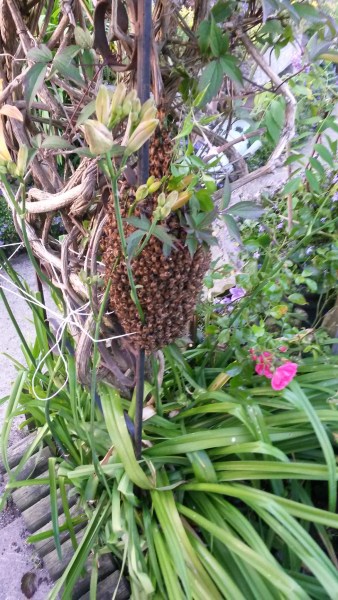
 The queen will be a virgin. These swarms are less likely to survive, but I’ve always assumed it is the bees “just making sure. Soon the swarm were safely tucked up in their new polynuc. But that wasn’t the end of the story.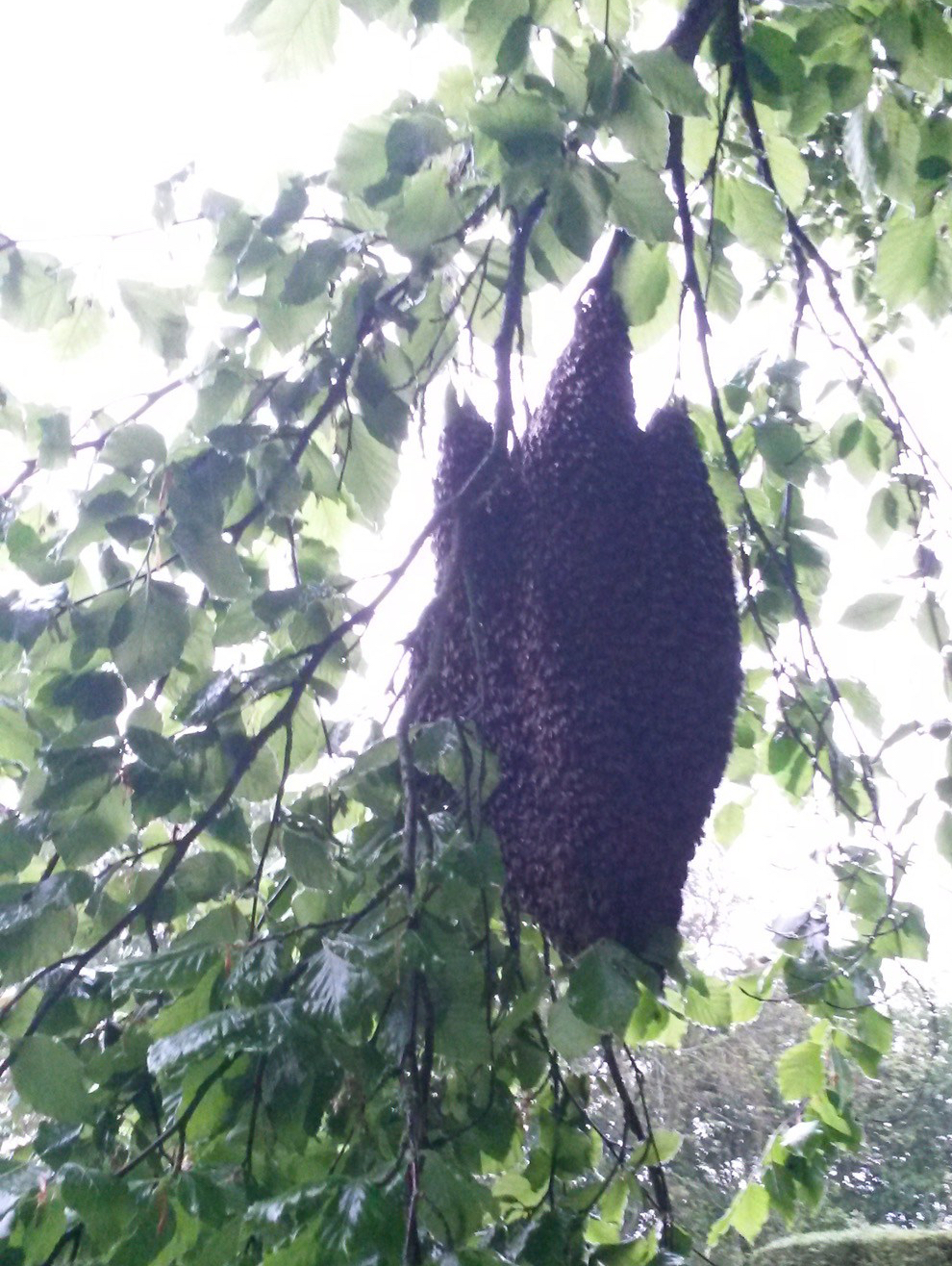



 Welcome to Buntingford Bees