This year spring has come early. Temperatures of 25oC have been reached ’round these parts and the bees have taken advantage. Whilst the temperatures in the past week have lowered to a moderate 12-15 oC, more of a seasonal average, my hive records from last year show the colonies built up slowly, following a very mild winter and didn’t really get going until late April. Interestingly having experienced a proper cold winter for once, the amount of blossom this spring is the most I’ve seen it for some years. It’s Easter Monday and all bar two colonies are now on double brood and raring to go.
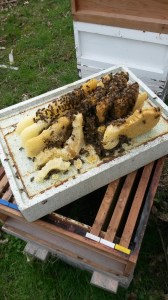
One over-wintered nuc needed more space and had a great way to show me it was time to transfer from its polystyrene home to a new brood box. They built wild comb. Beautiful architecture.
I took advantage of the expanding brood nests to take two busy colonies down the road to some flowering oil seed rape. One of the colonies was selected because it has a reputation for being prickly. It’s similar skills to dealing with grumpy teenagers. Treat them with kid gloves and put them as far away as possible from people!
Due to the area a worker bee forages there is a rule you move a colony three feet or three miles. I have another summer apiary site which is actually slightly less distance than this, but farmer Ben is so careful to spray only when he needs to or only at the right times of day, that the opportunity to feed on some oilseed rape (OSR) is too much to resist. Given the right conditions OSR produces vast quantities of pollen and nectar. Pollen is the bees source of protein and essential lipids, which they feed brood. In my opinion the honey isn’t a great taste but it makes a great blending honey.
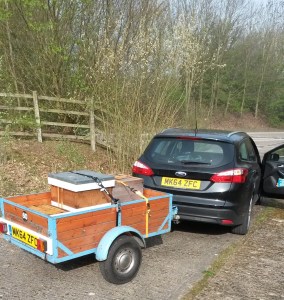
Moving bees can be quite a traumatic experience. Not only can a hive come apart or a gap appear at the entrance, releasing bees to fly around, they are also susceptible to vibration and over heating. For this reason I’ve tended to move at night. However this is not without its potential trauma, tripping over the slightest twig in the dark. I also have the recurring nightmare of being stopped by the law for appearing as a Ku Klux Clan cult character dressed in white beesuit. So this time I closed up at night, but waited until early morning to move. It worked well. Bees delivered to their new home. A few returned home, but I placed a small nuc on each of the original sites to capture any returning foragers. They have to beg their way into another colony, usually succeeding without a fight.
At the Angus apiary all the colonies now have a super to collect honey. Hopefully this strategy will yield some early season honey and colonies ready to start some queen rearing.
 Welcome to Buntingford Bees
Yes, I’ve spotted lots of bees in my garden too – and frequently have to rescue them from the conservatory when they fly in and can’t find their way out. All sounds very professional your end. May you be rewarded with lots of yummy honey in due course!
LikeLike